
Cladding
for the UAE
Fire Code.
Façade cladding designed, fabricated, and installed to the UAE Fire and Life Safety Code. DCD-listed materials only, fire consultant coordinated, third-party tested and certified. Pergolas and canopies are scoped on a separate page.
ACP & façade
Aluminium Composite Panel facades using fire-rated cores only (A2 / FR). Brands such as Alcobond and equivalent DCD-listed products. PE cores never used.
- A2 / FR mineral cores
- Aluminium & steel sub-frames
- Cavity fire barriers per FLSC
Marble & stone
Concealed steel sub-frames for marble, granite, and stone cladding. Engineered for wind load and tested for anchor pull-out.
- Steel sub-frame engineering
- Mechanical & chemical anchors
- Pull-out test reports
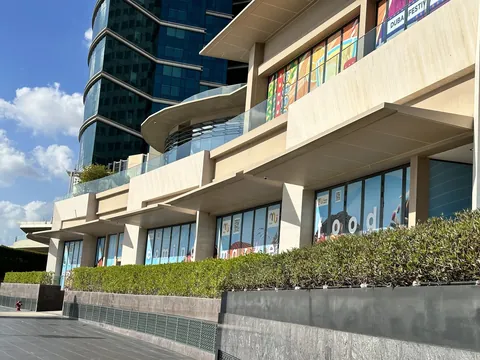
F.01 Detail
Fire code first, finish second.
The UAE Fire and Life Safety Code of Practice 2018 governs every façade in regulated buildings. Annexure A.1.21 covers cladding and fire stopping specifically. We design within the tested system, not around it.
We coordinate with DCD-licensed fire consultants (House of Expertise), source pre-tested pre-listed systems to avoid Engineering Judgement delays, and arrange third-party anchor pull-out tests and MPI on critical welds. Documentation pack closes out the DCD and DM submission.
Cladding FAQs (Dubai & UAE)
Cladding in the UAE is tightly regulated under the UAE Fire and Life Safety Code of Practice 2018, Annexure A.1.21 (cladding and fire stopping). Finesse designs, fabricates, and installs Civil Defence compliant exterior cladding systems for villas, warehouses, retail buildings, and commercial sites across Dubai. We are DM approved for steel structure construction, with ISO 9001 / 14001 / 45001 certification. For fire-safety scope, we coordinate with DCD-licensed fire consultants. Pergolas and steel canopies are scoped on a separate Pergolas & Canopies page.
Is cladding strictly regulated in Dubai?
Yes. The UAE Fire and Life Safety Code of Practice 2018 has specific requirements for façade and cladding systems, with Annexure A.1.21 covering fire stopping and exterior cladding in detail. The cladding supplier must be registered and licensed with Civil Defence, the materials must be tested and certified, the cladding design must be reviewed by a competent fire consultant before installation, and cavity fire barriers must be provided at each floor level.
What we do: we work only with DCD-listed materials and approved House of Expertise fire consultants, with full documentation of test certificates and engineering judgement letters for every project.
Reference: Dubai Civil Defence, UAE Fire and Life Safety Code of Practice
What cladding materials are allowed in the UAE?
Cladding must be tested, certified, and listed under the UAE FLSC's small-scale and full-scale fire testing requirements. Common compliant options include:
- Aluminium Composite Panels (ACP) with A2 or FR (fire-rated) mineral cores, NOT PE (polyethylene) cores
- Solid aluminium panels
- Honeycomb aluminium panels
- HPL (High Pressure Laminate) panels, fire-rated grades only
- Ceramic, terracotta, and stone cladding
- Metal mesh and perforated metal cladding
Combustible PE-core ACP, which was linked to several UAE and international façade fires, is not permitted in regulated buildings. We supply only DCD-approved certified panels with traceable test reports.
Does cladding need fire testing?
Yes. The UAE FLSC requires both small-scale tests on individual components and full-scale tests on the complete assembly (panel, insulation, sub-frame, fixings, fire stops) against American, British, or European fire test standards. Any deviation from a listed system requires an Engineering Judgement (EJ) from an accredited testing and certification body.
What we do: we source pre-tested, pre-listed systems and stay within their tested configuration so EJ exceptions are not needed. Where unavoidable, we work with DCD-approved certification bodies to obtain a compliant EJ.
How is cladding fixed safely to the building?
Cladding is fixed through aluminium or steel sub-frames anchored to the building structure with mechanical anchors. Anchor selection is critical because the fixings carry the full façade wind load. The UAE FLSC also requires cavity fire barriers at every floor level and around openings to stop fire spreading through the void behind the cladding.
How we verify it: we work with accredited third-party testing laboratories for on-site pull-out tests on a representative sample of installed anchors. Torque tests are performed on bolted sub-frame connections. Reports are issued in your name and submitted with the DCD package.
What welding and material standards do you use for cladding sub-frames?
Steel sub-frames for cladding systems are fabricated from BS EN 10025 sections, grade S275JR or S355JR, with hot-dip galvanizing to BS EN ISO 1461 or premium-grade paint systems for UAE coastal exposure. Welding follows the AWS D1.1/D1.1M Structural Welding Code for Steel, with visual inspection of every weld by our experienced QC team.
Critical welds (cladding sub-frame to host structure, primary anchorage plates) are checked by accredited third-party laboratories using Magnetic Particle Inspection (MPI).
What documents do I receive on completion?
- Structural drawings and calculations from a licensed consultant
- Fire consultant (House of Expertise) sign-off
- Cladding material test certificates and DCD listings
- Engineering Judgement letters, if applicable
- Material mill certificates for structural steel
- Welding procedure specifications (WPS) and weld inspection records
- Third-party pull-out test reports on anchors
- Third-party MPI reports on critical welds
- Galvanizing or paint system certificates
- DCD and DM completion certificates
Why choose Finesse for cladding in Dubai?
- Fire-safety expertise on call. We coordinate with DCD-licensed fire consultants for compliant cladding design, submission, and sign-off.
- Pre-tested cladding systems. We work from cladding panels and sub-frames that already carry DCD fire-test certification, so the file moves faster than a one-off Engineering Judgement.
- Third-party verified. Pull-out tests on anchors and MPI on critical welds through accredited UAE labs.
- In-house steel fabrication. Cladding sub-frames cut, bent, and welded in our own workshop.
- ISO 9001 / 14001 / 45001 certified.
- Full documentation pack ready for DCD and DM completion sign-off.